

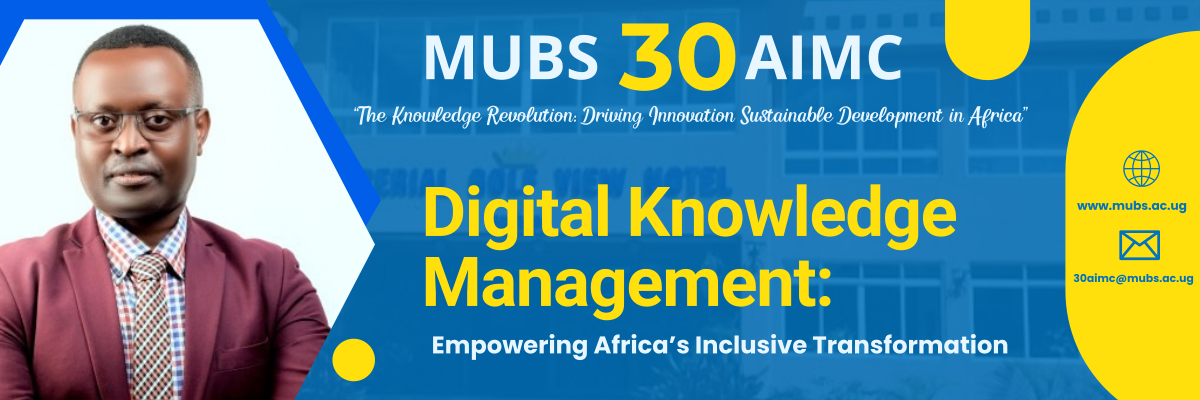
Africa’s Digital Transformation
Africa is entering a defining period of digital transformation. Across societies and economies, digital tools are reshaping how people learn, work, govern, access services and participate in opportunity. The challenge is to ensure that this transformation is inclusive, locally relevant and designed to strengthen Africa’s long-term development. Digital knowledge management provides a foundation for that progress. It connects people, ideas, data and institutions so that knowledge can be created, shared and applied to solve African challenges.
From Technology Consumers to Technology Creators
Artificial intelligence, data science, cloud computing, cybersecurity and digital platforms are becoming essential to modern development. Together, they can improve public services, support innovation, strengthen businesses and expand access to education, healthcare and finance. Their impact, however, depends on the skills, systems and values guiding their use.
Africa must move confidently from being primarily a consumer of imported technologies to becoming a creator of solutions that reflect its realities. This means investing in research, building local products and platforms, and supporting collaboration between universities, industry, government and communities.
Universities for Skills, Ethics and Enterprise
Universities have a central responsibility in this transformation. They must develop graduates who are technically skilled, ethically grounded and ready to contribute across disciplines. Computing education should therefore combine strong foundations in technology with critical thinking, communication, leadership and an understanding of society’s needs.
Universities must also nurture entrepreneurship. By encouraging students to identify meaningful problems, test practical ideas and build sustainable ventures, they can help turn knowledge into employment, services and locally owned innovation. Ethical responsibility must remain at the center, particularly when technologies influence rights, livelihoods and access to opportunity.
African-Centered Data and a Sustainable Future
Inclusive transformation requires African-centered data and AI. Data must reflect the diversity of African communities, languages, environments and lived experiences. It should be collected and governed responsibly, with attention to privacy, fairness, accessibility and the risk of excluding people whose realities are underrepresented. AI systems should serve communities rather than reproduce existing inequalities.
When Computing, Business, Data, Innovation and Entrepreneurship work together, digital knowledge becomes a practical pathway to sustainable development. The goal is not technology for its own sake, but stronger institutions, inclusive opportunities and solutions
that create lasting value for Africa and its people.
Dr. John Paul Kasse, PhD,
Dean, Faculty of Computing and Informatics,
